When James first saw Leia as a puppy, he met her mother, a purebred beagle, and was told her father was a cocker spaniel. She was a charmingly sweet dog all her life, "so laid back she was falling over," as in the filksong, an amiable lady who was content to simply rest at James' feet or lie next to his craft room as he was working, but if there was cocker spaniel in her anywhere, it was submerged under more powerful genes. I believe her mom had an active social life at that time. ☺ Leia's huge lopped-down ears that gave her her name (because they looked like the doggie equivalent of Princess Leia's earmuffs) turned into equally enormous stand-up ears (with whimsical voices we used to ask her if she could get the BBC) and she ended up resembling a half-size German Shepherd, with the black saddle upon brown.
One Christmas Eve I had some errands to do, but Leia was acting particularly droopy. We were going to leave her alone the next day, and I took pity on her. It was a nice cool day, unlike at least one Christmas when I flew home to Rhode Island and it was 70°F when the plane took off, so I had no qualms spreading a towel over the back seat and having her lie there as I drove around doing my errands. She loved car rides. I remember dropping off some gifts at the Elder house and getting gasoline, with Leia happily lying on the seat of "Shadow," my Dodge Omni, lolling her tongue and occasionally sitting up when I came to a stop so she could peer out the window.
I had one final errand somewhere, and I'm not sure where, but I was going there by way of Windy Hill Road. As you near Cobb Parkway, there's a spot where a QuikTrip gas station stands now, but back then it was an empty field that fronted the Sleepy Hollow Kennel, a boarding and training facility. Traffic was backed up at the traffic light and I had the leisure to note with interest that on this grassy landscape someone had erected a living Nativity. There was a wooden stable set up, and, although the people playing the Biblical characters were not yet there, the livestock was already situated. A donkey was tethered near the stable, near a sign advertising the Living Nativity later that evening, and in front of it were several sheep, cropping at hay bales that had been left out for them.
I heard Leia's claws scrabble on the door and since traffic was stopped dead I could look back at her, and when I did, I burst out laughing. There she was, staring at those sheep with an intensity that nearly burned through the glass. Her mouth was parted a little, but she wasn't doggy "smiling," it was almost if she looked astonished. This was the dog who as a half-grown youngling already brought up with a litter of kittens went to "Auntie Anne" to narc on Buttercup for moving her latest litter. And who, as she got older, tried to herd the kittens. And now she was giving the sheep the one over with a sort of half-dawning recognition in her eye. You could almost see thought balloons coming from her, as if she were a character from "the funnies.": "I know what those are! They're...they're...I know what those are! I'm supposed to do something with them, but I can't remember what. But I do know what those are..."
Then the light changed and the car moved and she went back to being laid-back Leia again, but I still remember that Christmas Eve when all her little buried sheepdog instincts came through.
Mementos Background
Showing posts with label dogs. Show all posts
And Of Course...Lassie
You wouldn't have to twist my arm very hard, although it would pain me to answer and have to leave so many beloved titles out: Get Smart!, The Waltons, Remember WENN, Ellery Queen, My World and Welcome to It, Star Trek, Babylon 5, Blake's 7, M*A*S*H, Doctor Simon Locke, Wild Wild West, and, naturally, Doctor Who. But if you buttonholed me, asked sternly, "What is your favorite television series of all time?" I'd have to say it.
Lassie.
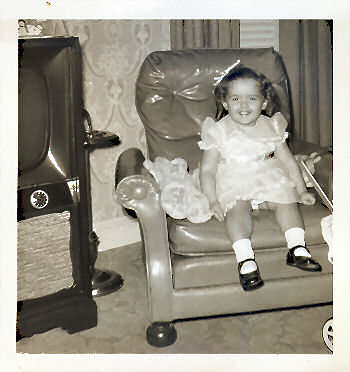
Television, especially in the early 1960s, brought children dreams. For most of us, it was a time of big wooden black-and-white consoles that were more furniture than electronics (color television existed, but the price was beyond most parents' reach), Bakelite-based rabbit-ear aerials that helped you pull in your local channels, three television networks plus some independent channels that pretty much ran old movies and black-and-white reruns all day long. And there was no watching your own program in a corner on a small, portable screen; the theater was right in your living room, and you gathered around it the way our ancestors gathered about a fire, to laugh or gasp or cry or hold on with tense fingers. Kids clad in footie pajamas curled on overstuffed sofas, or sprawled on the carpet, or sat on a newfangled stuffed animal called a "TV dog" to watch a favorite program with the rest of the family, softly lamplit with incandescent fire, surrounded by the trappings of the era: patterned wallpaper, corniced windows, layered curtains, Venetian blinds or green roller shades with pull cords, stolid furniture
on the floor and shadow boxes filled with knicknacks on the wall.
Fueled by monochrome shadows, we imagined being so many things in our outdoor play: cowboys or astronauts, explorers or spies, superheroes or policemen. And, as we knew from Roy Rogers and Gene Autry and Gail Davis (TV's Annie Oakley), every good hero had a sidekick or a best buddy. This could be a human being, but often our childhood buddies were cartoon critters (Yogi Bear and Huckleberry Hound, Ruff and Ready, and Rocky and Bullwinkle) or live-action animals (Lassie, Rin Tin Tin, Fury, Flicka, Yukon King, Roy Rogers' "wonder dog" Bullet and "golden palomino" Trigger, London the "littlest hobo," Gene Autry's Champion, and Velvet Brown's King). I loved them all, but for all the galloping free or the romance of Rusty and Rinty on the range, it was Lassie who was special.
I can't even conceive of life before Lassie; it seemed as if I had never not watched the series. My earliest memory of television IS Lassie, framed in a hulking box of a fifties' television set, polished dark wooden exterior, a fifteen-inch-screen topping a square of brocaded cloth that covered the speaker, with hard black plastic knobs to change the channels and adjust the volume, and deal with the dreaded "vertical roll" and "horizontal hold," on a very snowy station almost out of rabbit-ear range. With digital TV you don't see "snow" anymore; you either get the station or you don't, but back then if you were desperate enough to watch a certain program, you could attempt concentration beyond the pale picture shot with interference and the crackly sound (if any sound at all). While what I was watching "officially" on Sunday nights on CBS was first-run—what year? who knows? I saw "Lassie's Odyssey" first run, and that was broadcast two months after my sixth birthday; I was a fan much earlier than that—what I had seen amidst the electronic snow were reruns of earlier episodes. I was so young (and the picture/sound so bad) that I didn't realize those stories didn't feature Timmy, and I only "twigged" when, during supper one evening when I was about eleven years old, I told my parents I was going to write stories about Lassie and Timmy when I grew up. They very gently told me about this thing called "copyright," since neither had a notion of anything called "fanfiction." Mom then casually commented that there had been another boy on Lassie before Timmy.
It suddenly made sense of a years' long mystery. The first-run CBS stories I was now watching had Corey Stuart as Lassie's new master, but I was faithfully keeping up with old Timmy and Lassie stories in the afternoon rerun slot, and two Lassie scenes I had embedded in my mind never turned up in the reruns. One was of Lassie and "Timmy" walking down into a field of sheep, and the other was a scene from a story practically branded in my mind: Lassie on trial for biting someone! They were threatening to put her to sleep! And then a miracle!—the defense attorney tosses her the judge's gavel to catch and proves that the teeth marks on the handle did not match the bite marks on the person's leg! "Timmy" in the sheep scene of course was Jeff, and the gavel scene came from from "The Trial." Not until my high school years did a local station start re-broadcasting the Jeff episodes again so that the fragments made sense.
Since Lassie-love knew no bounds, I found other ways to work the collie into my life. One of my first stuffed dogs was named "Little Lassie," despite the fact it was a poodle. Most of the Lassie-branded items were over the family budget, but thank heavens for those 25¢ Whitman book "Authorized Editions," so I could read more Lassie adventures. One of my most cherished possessions was a thin children's picture book, Lassie's Brave Adventure, that had left another image burned upon my brain, one of Lassie high up on a wooden railroad trestle rescuing a colt whose hoof was caught in the tracks. Pens and Crayolas supplied endless drawings of Lassie and as soon as my fingers were able to take pen to paper in a coherent manner, those Lassie stories I swore I'd write were begun. Those newfangled cassette recorders were just a way to record your favorite Lassie episode off the television.
My watershed Lassie moment was "Lassie's Odyssey." Not then, not now, has there ever been a story to equal it, the story against which all other Lassie episodes were judged. For three weeks we watched Timmy wait anxiously back on the farm as Lassie traveled field and forest and river and ravine to return to him. And just as he had given up hope, and is burying all her toys, there is that bark of greeting over the hill... Exquisite drama, all wrapped up in violins and tears. To this day if I need a good cry, "Lassie's Odyssey" will supply it. Even today, when I see railroad tracks vanishing in the distance, all I can think of is Lassie's weary tread between the iron rails.
In Doctor Who fandom it's always said that your first Doctor is always your favorite, and I still do have a sneaking preference for Jon Pertwee. My companion of choice with Lassie was Timmy. Can you blame me?—the ultimate dream of a dog-allergic overprotected girlchild trapped in suburbia: running free on a farm with a collie as your best friend, hopping your bicycle or hiking in the woods or working on woodland projects for school. Even though Corey had been introduced so nicely in "The Disappearance," it was never quite the same again to me. The stories lost some of their drama because they involved adults and capitalized more on scenery and being promotional pieces for the Forest Service (which, if you have to be promotional, is, granted, not a bad thing to be advertising, rather than soap, shoes and Spam). Despite being an animal lover, except for "Have You Any Wool?", which had nice comic touches, I found the innovation of the "all-animal episode" a deadly bore. Lassie was always best playing against humans, I felt, and Lassie trailing/herding/barking at rabbits/deer/whatever for 25 minutes was more my idea of a nap than a suspenseful story.
But due to series' longevity there's a Lassie for everyone: those who started on the color episodes and were touched by the wildlife and the majestic scenery, are disappointed by the farm episodes where life was static and juvenile troubles abounded. There were those who went further back than I and watched the episodes with Jeff first, and never could stand Timmy. (Having been able to watch the series at least once starting from "Inheritance" through eighth season, I could actually understand: growing up with Jeff facing up to the facts he was fatherless, or struggling with growing-up problems, and then switching to pint-sized Timmy and his cutesy fantasy dreams—thank heaven they quit doing that!—must have been quite the letdown; many never stuck around to see him become the self-sufficent, if trouble-prone, boy who was able to return many of Lassie's favors and save her life. As indulgent as I am, even I'm ho-hum about fourth season-post-Jeff and fifth; it wasn't until Timmy was a little older that the episodes really became lively again—not to mention that nothing quite measured up to Ellen Miller's psychological approach to her son's problems; she was the ultimate single mom! Indeed, I get letters from male fans still bristling at the audacity of Clay Horton telling Ellen she needed a man around the house, admiring her self-sufficiency in an age that still expected women to cling!)
I can still sit down with any black-and-white episode of any persuasion and enjoy it. Perhaps the series might have still worked for me if the writing remained the same. So many of the Jeff episodes and Timmy episodes were psychological pieces: will Jeff take the dare, thereby perhaps losing Lassie to Harry? Will Timmy do the right thing in turning over a friend to law enforcement authorities? Will Timmy really give Lassie to Joey for use as a guide dog? Will Jeff learn to use time wisely, but not let it be his master? The older writers had a way of telling a suspenseful tale (or even a humorous one) and sneaking a Important Lesson in the mix to be digested without choking, while the newer scriptwriters wrote the story into the Important Lesson with large dollops of BIG IMPORTANT SPEECHES. I like to imagine those 1970s stories written with 1950s sensibilities, and how it would have made the Holden Ranch boys come alive.
But that's just me; whatever your "flavor" of Lassie, there's always one constant: the clever, gallant collie with a heart big enough for everyone, the one you can always depend on. And, in the end, whether taking place on farm, in forest, or out west, it's all we ever hope it can be.
Lassie.
Fueled by monochrome shadows, we imagined being so many things in our outdoor play: cowboys or astronauts, explorers or spies, superheroes or policemen. And, as we knew from Roy Rogers and Gene Autry and Gail Davis (TV's Annie Oakley), every good hero had a sidekick or a best buddy. This could be a human being, but often our childhood buddies were cartoon critters (Yogi Bear and Huckleberry Hound, Ruff and Ready, and Rocky and Bullwinkle) or live-action animals (Lassie, Rin Tin Tin, Fury, Flicka, Yukon King, Roy Rogers' "wonder dog" Bullet and "golden palomino" Trigger, London the "littlest hobo," Gene Autry's Champion, and Velvet Brown's King). I loved them all, but for all the galloping free or the romance of Rusty and Rinty on the range, it was Lassie who was special.
I can't even conceive of life before Lassie; it seemed as if I had never not watched the series. My earliest memory of television IS Lassie, framed in a hulking box of a fifties' television set, polished dark wooden exterior, a fifteen-inch-screen topping a square of brocaded cloth that covered the speaker, with hard black plastic knobs to change the channels and adjust the volume, and deal with the dreaded "vertical roll" and "horizontal hold," on a very snowy station almost out of rabbit-ear range. With digital TV you don't see "snow" anymore; you either get the station or you don't, but back then if you were desperate enough to watch a certain program, you could attempt concentration beyond the pale picture shot with interference and the crackly sound (if any sound at all). While what I was watching "officially" on Sunday nights on CBS was first-run—what year? who knows? I saw "Lassie's Odyssey" first run, and that was broadcast two months after my sixth birthday; I was a fan much earlier than that—what I had seen amidst the electronic snow were reruns of earlier episodes. I was so young (and the picture/sound so bad) that I didn't realize those stories didn't feature Timmy, and I only "twigged" when, during supper one evening when I was about eleven years old, I told my parents I was going to write stories about Lassie and Timmy when I grew up. They very gently told me about this thing called "copyright," since neither had a notion of anything called "fanfiction." Mom then casually commented that there had been another boy on Lassie before Timmy.
It suddenly made sense of a years' long mystery. The first-run CBS stories I was now watching had Corey Stuart as Lassie's new master, but I was faithfully keeping up with old Timmy and Lassie stories in the afternoon rerun slot, and two Lassie scenes I had embedded in my mind never turned up in the reruns. One was of Lassie and "Timmy" walking down into a field of sheep, and the other was a scene from a story practically branded in my mind: Lassie on trial for biting someone! They were threatening to put her to sleep! And then a miracle!—the defense attorney tosses her the judge's gavel to catch and proves that the teeth marks on the handle did not match the bite marks on the person's leg! "Timmy" in the sheep scene of course was Jeff, and the gavel scene came from from "The Trial." Not until my high school years did a local station start re-broadcasting the Jeff episodes again so that the fragments made sense.
Since Lassie-love knew no bounds, I found other ways to work the collie into my life. One of my first stuffed dogs was named "Little Lassie," despite the fact it was a poodle. Most of the Lassie-branded items were over the family budget, but thank heavens for those 25¢ Whitman book "Authorized Editions," so I could read more Lassie adventures. One of my most cherished possessions was a thin children's picture book, Lassie's Brave Adventure, that had left another image burned upon my brain, one of Lassie high up on a wooden railroad trestle rescuing a colt whose hoof was caught in the tracks. Pens and Crayolas supplied endless drawings of Lassie and as soon as my fingers were able to take pen to paper in a coherent manner, those Lassie stories I swore I'd write were begun. Those newfangled cassette recorders were just a way to record your favorite Lassie episode off the television.
My watershed Lassie moment was "Lassie's Odyssey." Not then, not now, has there ever been a story to equal it, the story against which all other Lassie episodes were judged. For three weeks we watched Timmy wait anxiously back on the farm as Lassie traveled field and forest and river and ravine to return to him. And just as he had given up hope, and is burying all her toys, there is that bark of greeting over the hill... Exquisite drama, all wrapped up in violins and tears. To this day if I need a good cry, "Lassie's Odyssey" will supply it. Even today, when I see railroad tracks vanishing in the distance, all I can think of is Lassie's weary tread between the iron rails.
In Doctor Who fandom it's always said that your first Doctor is always your favorite, and I still do have a sneaking preference for Jon Pertwee. My companion of choice with Lassie was Timmy. Can you blame me?—the ultimate dream of a dog-allergic overprotected girlchild trapped in suburbia: running free on a farm with a collie as your best friend, hopping your bicycle or hiking in the woods or working on woodland projects for school. Even though Corey had been introduced so nicely in "The Disappearance," it was never quite the same again to me. The stories lost some of their drama because they involved adults and capitalized more on scenery and being promotional pieces for the Forest Service (which, if you have to be promotional, is, granted, not a bad thing to be advertising, rather than soap, shoes and Spam). Despite being an animal lover, except for "Have You Any Wool?", which had nice comic touches, I found the innovation of the "all-animal episode" a deadly bore. Lassie was always best playing against humans, I felt, and Lassie trailing/herding/barking at rabbits/deer/whatever for 25 minutes was more my idea of a nap than a suspenseful story.
But due to series' longevity there's a Lassie for everyone: those who started on the color episodes and were touched by the wildlife and the majestic scenery, are disappointed by the farm episodes where life was static and juvenile troubles abounded. There were those who went further back than I and watched the episodes with Jeff first, and never could stand Timmy. (Having been able to watch the series at least once starting from "Inheritance" through eighth season, I could actually understand: growing up with Jeff facing up to the facts he was fatherless, or struggling with growing-up problems, and then switching to pint-sized Timmy and his cutesy fantasy dreams—thank heaven they quit doing that!—must have been quite the letdown; many never stuck around to see him become the self-sufficent, if trouble-prone, boy who was able to return many of Lassie's favors and save her life. As indulgent as I am, even I'm ho-hum about fourth season-post-Jeff and fifth; it wasn't until Timmy was a little older that the episodes really became lively again—not to mention that nothing quite measured up to Ellen Miller's psychological approach to her son's problems; she was the ultimate single mom! Indeed, I get letters from male fans still bristling at the audacity of Clay Horton telling Ellen she needed a man around the house, admiring her self-sufficiency in an age that still expected women to cling!)
I can still sit down with any black-and-white episode of any persuasion and enjoy it. Perhaps the series might have still worked for me if the writing remained the same. So many of the Jeff episodes and Timmy episodes were psychological pieces: will Jeff take the dare, thereby perhaps losing Lassie to Harry? Will Timmy do the right thing in turning over a friend to law enforcement authorities? Will Timmy really give Lassie to Joey for use as a guide dog? Will Jeff learn to use time wisely, but not let it be his master? The older writers had a way of telling a suspenseful tale (or even a humorous one) and sneaking a Important Lesson in the mix to be digested without choking, while the newer scriptwriters wrote the story into the Important Lesson with large dollops of BIG IMPORTANT SPEECHES. I like to imagine those 1970s stories written with 1950s sensibilities, and how it would have made the Holden Ranch boys come alive.
But that's just me; whatever your "flavor" of Lassie, there's always one constant: the clever, gallant collie with a heart big enough for everyone, the one you can always depend on. And, in the end, whether taking place on farm, in forest, or out west, it's all we ever hope it can be.
Labels:
dogs,
television
Subscribe to:
Posts (Atom)